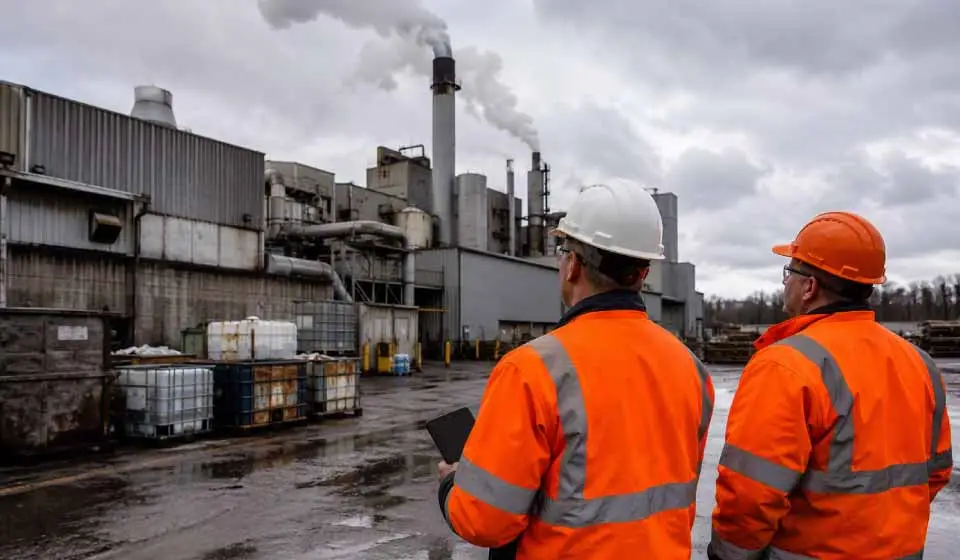


Construction company fined for repeated site failures
A West Midlands based construction company has been fined after Britain’s workplace regulator found repeated failures at four different construction sites across the region.
The UK’s Department for Environment, Food & Rural Affairs published their Policy Paper entitled: “PFAS Plan: Building a safer Future together” on February 3rd. The Foreword reads as follows:
“Per- and poly-fluoroalkyl substances (PFAS), often called ‘forever chemicals’, represent one of the most pressing chemical challenges of our time. They are used throughout our everyday lives as their unique properties have brought significant benefits to society. They appear in non-stick frying pans in your kitchens and medical devices in our hospitals. They are used in clean energy technologies that power our industries and safety equipment that protects us from harm. Yet their persistence and widespread presence in our environment pose risks we cannot ignore.
This is an important issue for the government to address. PFAS contamination threatens public health, wildlife and the quality of our natural environment. Acting now is essential to prevent irreversible harm and to ensure that our regulatory frameworks keep pace with scientific evidence.
This plan provides a foundation for how we will act – decisively but proportionately – to manage risks. Our vision is to reduce and minimise the harmful effects of PFAS while transitioning to safer alternative substances. It reflects our commitment to protect public health and the environment while supporting innovation and economic growth.
Our approach is rooted in science and collaboration. We will strengthen understanding and awareness, tackle the sources of PFAS and how they move through the environment, and reduce ongoing exposure to the PFAS that are already out there. We will work in partnership across the UK, with devolved governments, industry, scientists, environmental groups and local communities. We will continue to lead internationally, contributing to global efforts to phase out harmful PFAS and share best practice.
This is a long-term challenge, but through coordinated action we can ensure that we pass on to the next generations an environment that is better than the one we inherited. Together, we will protect our environment, safeguard public health, and build a cleaner, safer future.”
To read the full Policy Paper, click here.
A West Midlands based construction company has been fined after Britain’s workplace regulator found repeated failures at four different construction sites across the region.
Manufacturing environments are complex, fast-moving and inherently high-risk. There are no shortcuts for managing the health, safety, quality, and environment in this industry, with multiple production lines, contractors, assets, and regulatory requirements to manage. Without the right systems, there is an increased risk of operational inefficiency, safety incidents, and inconsistent quality.
A tech-curious maintenance manager wants a way to connect assets reliably, gain an operational context, and have a data-driven plan across their domain. Their goal is not simply to respond to breakdowns, but to anticipate them, understand their root causes, and manage assets in a way that reduces downtime and cost.
Ontario Labour Minister David Piccini says labour ministers across Canada have taken an unprecedented step toward “one Canada, one standard”, but safety professionals caution divergent provincial laws still threaten true harmonization.
HSEQ management has evolved significantly over the past decade. As workforces become more mobile and operations more complex, traditional, desktop-based systems struggle to keep pace. AI and mobile technology are now playing a key role in helping HSEQ teams manage risk more efficiently, improve visibility and reduce administrative burden — without compromising compliance.
For fire and rescue services, every second counts. Equipment must be ready, maintained, and accounted for at all times. Yet many organisations still rely on manual logs, spreadsheets, or disconnected systems, which can lead to missed inspections, delayed maintenance, and reduced operational visibility.
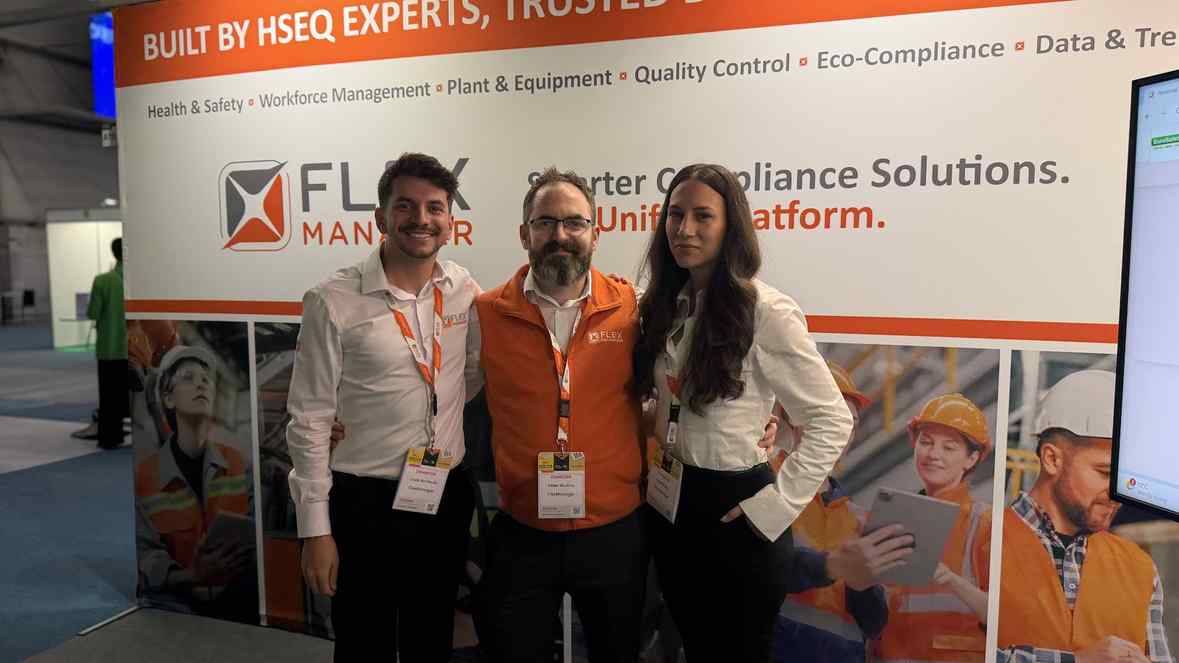
FlexManager is pleased to announce that we will be exhibiting at the National Construction Summit, taking place on 15–16 April at the Sport Ireland Campus, Dublin.
FlexManager is pleased to announce that we will be exhibiting at the Institute of Asphalt Technology (IAT) Annual Conference, taking place on the 14th of April at the Hodson Bay Hotel, Athlone.
Great Britain’s national regulator for workplace health and safety is inviting businesses, employers, health practitioners and industry stakeholders to help shape the future of workplace incident reporting in Great Britain.
On April 10 in Montreal, Ontario Labour Minister David Piccini will ask his counterparts across Canada to make concrete decisions that would put two core safety training requirements on a path to full national harmonization by January 1, 2027.
Data is now central to how HSEQ teams manage risk, demonstrate compliance, and report performance. From incident reports and audits to training records and contractor information, organisations are collecting more information than ever. However, more data does not automatically mean better decisions. Without proper structure, validation, and interpretation, HSEQ data can mislead, overwhelm, or even increase risk, impacting the ability for teams to act proactively.
We want to wish all of our clients and connections an enjoyable and relaxing Easter period. We hope that the season ahead brings clarity, momentum, and positive progress in your ambitions this year.
Fill out the form below and one of our FlexPerts will contact you.