FlexManager at the 2026 National Manufacturing & Supply Chain Expo
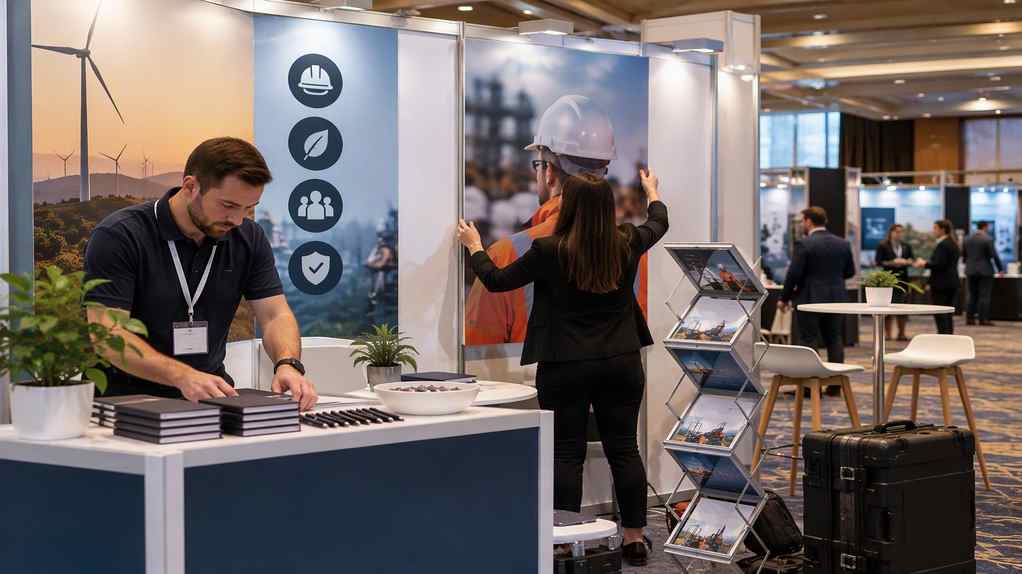
FlexManager is pleased to announce that we will be exhibiting at the National Manufacturing & Supply Chain Expo, taking place on 27–28 May at RDS Simmonscourt, Dublin.
This post is linked to another news post which discussed deputy ministers across Canada meeting to discuss Safety Harmonization. This can be found here.
Federal, provincial, and territorial deputy ministers met behind closed doors last week to discuss the ongoing effort to harmonize occupational health and safety (OHS) requirements across Canada. The meeting, held on October 22, brought together senior officials from across the country to review progress and set the stage for future collaboration.
In a statement provided to Canadian Occupational Safety, Employment and Social Development Canada (ESDC) described the meeting as “productive,” noting that it covered “various labour topics, such as harmonization of occupational health and safety requirements.” The department added, “This operational meeting aimed to take stock of the progress made across jurisdictions, to discuss priorities and topics of mutual interest, and to advance cooperatively. This groundwork will help identify shared priorities to be discussed at the next FPT Ministers meeting, which will take place in the spring of 2026.”

While the government’s statement emphasized cooperation and incremental progress, industry stakeholders continue to express concern about the pace and focus of the harmonization process. Kevin Brown, CEO of Cobalt Safety Consulting, said in an interview that meaningful harmonization must begin with regulatory alignment, not training standards.
“You can’t harmonize training standards until you harmonize the regulatory law underneath it,” Brown said. “You just can’t build a bridge on shaky foundations, and I think that’s what we’re trying to do. The bridge for Canada and Canadian workers is great, but if we don’t get the foundation right for the employers and for the workers in clear understanding, I think we’re all going to struggle with the outcomes.”
Brown, who has provided recommendations to both federal and provincial officials, believes the real challenge lies in aligning existing laws rather than creating new ones. “That’s what we got to get to—that standard at a regulatory level. It’s a bigger lift. It’s also the harder one. But hard is what we need to be doing when it comes to getting the systems aligned,” he said.
The complexity of Canada’s regulatory landscape is a recurring theme among safety professionals. Dave Turner, president of Health and Safety Professionals of Canada, questioned the government’s focus on certification as the first step. “I’m not sure where they got the idea that certification was the first step. We told them that there is a National Fire Code and Building Code so we need something similar when it comes to OHS Regulations. Provinces’ regulations are similar in some instances but not in every situation,” Turner commented on LinkedIn.
Wayne Pardy, an auditor and author of several HSEQ auditing books, highlighted the practical challenges faced by employers operating across multiple jurisdictions. “When I was with one of them the safety schizophrenia which resulted from seeking to meet CLC Part II requirements, in addition to the select requirements of different provinces was a cluster. . . Try developing a regulatory applicability matrix to meet those many and varied federal and provincial requirements, often conflicting with one another. Come on Canada. We can do better,” Pardy wrote.
Despite the frustrations voiced by industry experts, there is consensus the current dialogue represents a necessary first step. Brown acknowledged that, while progress is slow, ongoing conversations are preferable to inaction. However, he warned the current pace may not be sufficient to achieve meaningful harmonization. “If we’re really serious about harmonizing stuff, we need to get to a National Council for Safety Harmonization.”
Looking ahead, the groundwork laid during last week’s meeting will inform the agenda for the next Federal, Provincial, and Territorial Ministers meeting in spring 2026. Stakeholders across the country will be watching closely to see whether the focus shifts from discussion to concrete action—particularly on the foundational issue of regulatory alignment.
As provinces and the federal government continue to navigate the complexities of OHS harmonization, the call from industry is clear: meaningful progress will require both urgency and a willingness to tackle the hardest issues first.
Original Article – The Safety Mag
FlexManager is pleased to announce that we will be exhibiting at the National Manufacturing & Supply Chain Expo, taking place on 27–28 May at RDS Simmonscourt, Dublin.
On 23 May, FlexManager officially turns 15 years old, and we want to take a moment to say thank you.
As fire services face increasingly complex incidents, from climate-driven emergencies to large-scale civil protection challenges, the need for connected, intelligent operational systems has never been greater.
FlexManager is excited to announce that we will be exhibiting at INTERSCHUTZ 2026, taking place in Hannover, Germany. Held every five years, INTERSCHUTZ is the world’s leading trade fair for fire and rescue services, civil protection, safety, and security. The event brings together international emergency service professionals, technology providers, and industry experts to explore the latest innovations shaping the future of hazard prevention and emergency response.
Compliance software is only as effective as the people using it. Without proper training, modules sit unused, reports go unsubmitted, and risks can go unseen. FlexManager bridges that gap with specialist training delivered both on-site and remotely, giving your team the confidence and know-how to fully leverage the platform, no matter where your operations are.
Every job carries risks, even routine tasks. A Job Hazard Analysis (JHA)/Job Risk Management (JRM) task breaks a job into individual steps, identifies potential hazards at each stage, and defines control measures to reduce risk. For HSEQ professionals and operations managers, JHAs are critical tools for preventing injuries, ensuring compliance, and maintaining operational efficiency.
For QHSE, the pace of change is accelerating. Expanding regulatory requirements, higher expectations from clients, and tighter operational margins are pushing compliance into a fully fledged business capability.
It’s Time for a Recap: Chief Fire Officers’ Association – 67th Annual Conference https://vimeo.com/1191458151?fl=pl&fe=sh Held in Sligo on 6 and 7 May, the Chief Fire Officers’ Association 67th Annual Conference 2026 brought together fire service leaders, emergency management professionals, and key stakeholders from across Ireland to explore the evolving risks shaping the future of fire…
Many compliance software platforms charge per user. We don’t. That's right, at FlexManager clients are charged based on the number of users that are added to the system. Whether you have 10 users or 1,000, the cost does not increase because of headcount.
It’s Time for a Recap: CIF Health & Safety Summit 2026 https://vimeo.com/1191196825?fl=pl&fe=sh The CIF Health & Safety Summit 2026 brought together leaders from across Ireland’s construction industry to explore one of the sector’s biggest priorities: moving beyond reactive compliance and building a stronger, more proactive culture of health, safety, and wellbeing. Held at Croke Park,…
We are into the summer months. With this in mind, it is important to adapt to our environment and avoid any dangers related to extreme temperatures. Heat stress and dehydration can cause more than just discomfort; it can pose serious risk to health and safety. Keep your teams informed on how to beat the heat. Send an Employee Bulletin today to share these 5 essential tips for working in heat.
Fire services operate in high-pressure, high-risk environments. Every second counts, every piece of equipment must be ready, and every process must run smoothly. Many organisations still struggle with manual workflows, paper-based inspections, or disconnected systems, which can slow operations, increase risk, and complicate compliance.
Fill out the form below and one of our FlexPerts will contact you.