Ontario Labour Minister David Piccini says labour ministers across Canada have taken an unprecedented step toward “one Canada, one standard”, but safety professionals caution divergent provincial laws still threaten true harmonization.
Piccini outlined his goals ahead of the April 10 gathering of federal, provincial and territorial labour ministers in Québec City, and achieved all of them. The meeting produced a work plan that goes beyond the vague statements he has seen at similar events. He described it as a shift from “high‑level, sort of nebulous planning language” to a detailed roadmap with firm targets.
Concrete outcomes from the April 10 ministers’ meeting
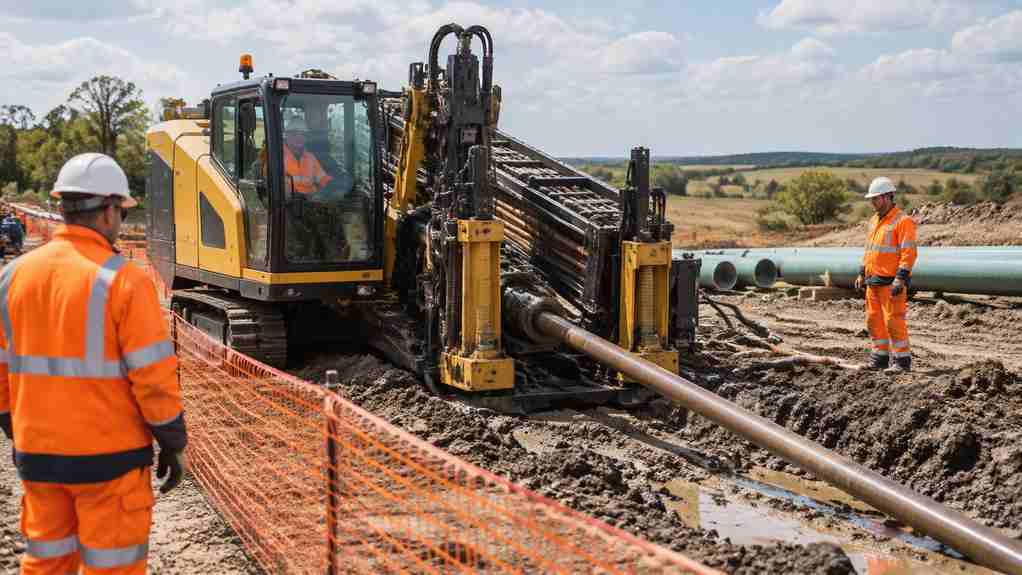
Ministers endorsed a plan to harmonize construction training for working at heights and mobile elevated work platforms (MEWPs) by January 1, 2027, a key goal for Ontario heading into the meeting. They also agreed to consult on training for hoisting and rigging, and trenching and shoring by January 1, 2027, and to collaborate on training for entry‑level construction workers and construction supervisors with a plan for harmonization expected by May 2027.
Piccini called the commitment on both working at heights and MEWPs “one of the most significant outcomes.”
The official communiqué from the federal government notes ministers also directed officials to “identify tangible steps to advance an interjurisdictional training approach” by the fall of 2026 and agreed to meet more frequently to track progress. They are set to reconvene in the fall of this year in Nova Scotia and again in the spring of 2027 in Saskatchewan.
Ontario regulations set as national benchmark
Provinces are expected to adopt Ontario’s working-at-heights regulation, according to Piccini. “We put forward Ontario’s standard as the benchmark,” and he said many provinces already train to that level informally but have not yet formalized it in regulation or policy.
He argued Ontario’s experience proves the higher bar is justified, pointing to “a 20 plus percent reduction in those types of injuries and accidents versus a 6% reduction elsewhere in the country.” That kind of evidence, he said, resonated with colleagues who emphasized the need for data‑driven decision‑making. Ontario’s MEWP regulation has also been put forward as the standard.
The broader statement from the federal government frames the initiative as part of a nation‑building effort to support major infrastructure projects and labour mobility, with co‑chairs John Zerucelli, federal Secretary of State (Labour), and Quebec Labour Minister Jean Boulet highlighting the need to “maintain high health and safety standards” while making it easier for workers to move between jurisdictions.
Piccini linked the harmonization push to wider economic and infrastructure priorities, from new nuclear projects and critical minerals to long‑delayed transit builds. “Ontarians don’t want to navel gaze at a plan for another decade out. Ontarians want to build today,” he said, adding that worker mobility and training recognition should not contribute “to the slightest of delay.”
‘Cart before the horse?’: Safety professionals question the strategy
Reaction from safety professionals on LinkedIn has been mixed; cautiously optimistic in some quarters and more critical in others.
Dr. Sarah W., director at Canadian Safety Group Inc., called the approach “shortsighted” reflecting concern that the focus on training may not address deeper structural issues.
Kevin Brown, CEO of Cobalt Safety, expanded on that critique. He agreed with Sarah’s assessment, arguing that trying to harmonize training standards on top of divergent provincial laws is “putting the cart before the horse.”
“It is important, it’s just not the first step,” Brown wrote. “By doing safety this way they are masking the fact that employers will still have additional duties to ensure workers are trained to the provincial laws of the province they are working in. The real issue is the 14 different laws in Canada for the same hazard of gravity.” In his view, the “external system” of legislation must be aligned before training can be truly harmonized. But Piccini has said province’s have indicated a willingness to adopt the regulation that is perceived as the highest standard, which appears to be what will happen with working-at-heights and MEWP.
HSEQ manager Wayne Pardy described the outcome as a step whose value will depend on implementation. “Me thinks the proverbial horse has already left the barn,” he wrote, adding that it will be “interesting to see which province(s) make the case for having the reg. that’s perceived as the higher standard.” He also questioned whether other provinces would be prepared to audit their approved training providers or adopt “prudent quality control” processes like those used in Newfoundland and Labrador.
Progress long overdue, but legal gaps remain
At the same time, some professionals welcomed the fact that tangible movement is finally happening. In a separate post highlighting the harmonization effort, Brown wrote, “We are making some progress,” a sentiment echoed by others who see national standards as long overdue.
Piccini acknowledged that provinces are starting from different places and that some rely more on policy than regulation to align with common standards. His goal, he said, is for workers to be trained to national specifications “such that they could work in any province without any need for recertification.”
Beyond training, ministers also used the Québec City meeting to launch a federal‑provincial‑territorial working group on misclassification in the trucking industry and to signal progress toward possible ratification of an International Labour Organization occupational health and safety convention.
For now, ministers have set an ambitious timeline and elevated the file politically by committing to meet again this fall.