FlexManager at the 2026 National Manufacturing & Supply Chain Expo
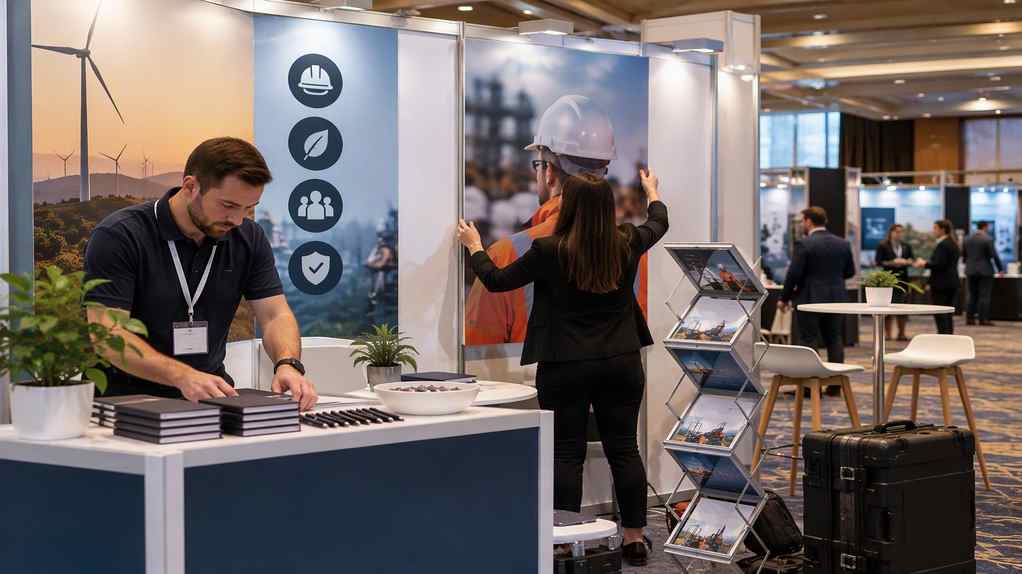
FlexManager is pleased to announce that we will be exhibiting at the National Manufacturing & Supply Chain Expo, taking place on 27–28 May at RDS Simmonscourt, Dublin.
Canada could see safety certification standards harmonized across several provinces by the end of this year, according to Canada’s Building Trades Unions (CBTU) Executive Director Sean Strickland—a timeline that, if realized, would mark a significant shift for health and safety leaders who have watched the issue stall for decades.
Strickland told Canadian Occupational Safety he believes there is a “good likelihood” that safety training harmonization will be in place across a few provinces by year‑end, with more jurisdictions potentially joining once the benefits become clearer to workers and project owners. He characterized that view as both “realistic and optimistic” considering the political momentum now behind the file.
For health and safety leaders, the prospect of concrete progress within 12 months will be notable. Many have seen previous harmonization discussions falter amid constitutional realities and entrenched provincial regimes. Labour and occupational health and safety laws are largely provincially regulated and have developed independently over many years, a situation legal experts have described as a “heavy legislative lift” to change.
Strickland acknowledges that challenge and stresses the process is still at an early stage. “We’re not anywhere near the finish line yet,” he said, adding that the current phase should be understood as the beginning of a longer journey rather than a near‑term overhaul. At the same time, he argues that the level of governmental support is unlike anything he has seen in more than 40 years in construction.
That political backing is being translated into concrete work through the Canadian Association of Administrators of Labour Legislation (CAALL), which held a national meeting on safety harmonization in the fall and has another planned for the spring. Strickland says recent discussions have generated “serious momentum,” with indications of buy‑in from several jurisdictions that could move first.
Organized labour has now formally aligned itself with that effort. CBTU’s Canadian Executive Board recently passed a unanimous resolution endorsing Ontario Labour Minister David Piccini’s leadership role in the harmonization project. The resolution supports an Ontario‑ and Nova Scotia‑led national push to streamline safety certifications across jurisdictions.
Piccini, who was designated by premiers and labour ministers to lead the initiative nationally, has been promoting the project publicly. On Wednesday he met with industry leaders at the Canadian Construction Safety Council Secretariat in Montréal, later posting on social media that he was “honoured to speak” to the group and thanking CCSC Chair Philippe Adam for his leadership. He framed the initiative as “raising the bar and lowering the barriers,” describing it as a “new vision for health and safety harmonization and improved labour mobility” that will help skilled workers move more easily between provinces, strengthen protections on job sites and support “nation‑building projects that connect communities across Canada.”
In a statement to Canadian Occupational Safety, Piccini’s office said: “Ontario is advancing work to harmonize core health and safety training and bring a pan‑Canadian policy proposal forward to labour ministers across the country. The goal is the harmonization of health and safety certifications, cutting duplication so qualified workers can get to job sites sooner and employers can fill urgent roles faster.”
Behind that rhetoric, CBTU and its partners have identified a first tranche of specific training and certification areas where harmonized standards are being prioritized:

Strickland says the list is designed to capture both high‑risk tasks and roles that are central to interprovincial mobility. For new workers, he points to Alberta’s mandated entry‑level construction training as a likely model, describing it as “best in class” when compared with other provinces. In many jurisdictions, he notes, entry‑level workers receive only basic instruction before being dispatched to a job site within a day or two; a harmonized, Alberta‑style program would provide a broader introduction to the industry and typical hazards in different sectors.
Supervisor training is another early focus. Strickland describes current supervisory training as “very inconsistent across jurisdictions” and across project owners and contractors. The goal of harmonization in this area is to establish a recognized baseline of supervisory qualifications before individuals take on site‑level responsibilities, including a stronger emphasis on preventing lost‑time injuries and reportable incidents and ensuring crews have the tools and conditions required for safe work.
Strickland also stresses the harmonization initiative is not intended to disrupt the existing network of training providers. “This isn’t about changing the safety ecosystem in terms of the delivery agents for safety programs across the country,” he said. “This is about changing the curriculum so we have a better standard across the country,” with the aim of improving safety outcomes for both unionized and non‑union workers.
For health and safety leaders, the immediate practical guidance from CBTU is to monitor developments closely, particularly in the seven identified priority areas. As curricula are developed and refined over the coming months, organizations involved in training, certification, and site‑level safety management can expect to see clearer national expectations emerge—first in a subset of provinces, if Strickland’s timeline proves accurate, and eventually, he hopes, across the country.
Original Article – The Safety Mag
FlexManager is pleased to announce that we will be exhibiting at the National Manufacturing & Supply Chain Expo, taking place on 27–28 May at RDS Simmonscourt, Dublin.
On 23 May, FlexManager officially turns 15 years old, and we want to take a moment to say thank you.
As fire services face increasingly complex incidents, from climate-driven emergencies to large-scale civil protection challenges, the need for connected, intelligent operational systems has never been greater.
FlexManager is excited to announce that we will be exhibiting at INTERSCHUTZ 2026, taking place in Hannover, Germany. Held every five years, INTERSCHUTZ is the world’s leading trade fair for fire and rescue services, civil protection, safety, and security. The event brings together international emergency service professionals, technology providers, and industry experts to explore the latest innovations shaping the future of hazard prevention and emergency response.
Compliance software is only as effective as the people using it. Without proper training, modules sit unused, reports go unsubmitted, and risks can go unseen. FlexManager bridges that gap with specialist training delivered both on-site and remotely, giving your team the confidence and know-how to fully leverage the platform, no matter where your operations are.
Every job carries risks, even routine tasks. A Job Hazard Analysis (JHA)/Job Risk Management (JRM) task breaks a job into individual steps, identifies potential hazards at each stage, and defines control measures to reduce risk. For HSEQ professionals and operations managers, JHAs are critical tools for preventing injuries, ensuring compliance, and maintaining operational efficiency.
For QHSE, the pace of change is accelerating. Expanding regulatory requirements, higher expectations from clients, and tighter operational margins are pushing compliance into a fully fledged business capability.
It’s Time for a Recap: Chief Fire Officers’ Association – 67th Annual Conference https://vimeo.com/1191458151?fl=pl&fe=sh Held in Sligo on 6 and 7 May, the Chief Fire Officers’ Association 67th Annual Conference 2026 brought together fire service leaders, emergency management professionals, and key stakeholders from across Ireland to explore the evolving risks shaping the future of fire…
Many compliance software platforms charge per user. We don’t. That's right, at FlexManager clients are charged based on the number of users that are added to the system. Whether you have 10 users or 1,000, the cost does not increase because of headcount.
It’s Time for a Recap: CIF Health & Safety Summit 2026 https://vimeo.com/1191196825?fl=pl&fe=sh The CIF Health & Safety Summit 2026 brought together leaders from across Ireland’s construction industry to explore one of the sector’s biggest priorities: moving beyond reactive compliance and building a stronger, more proactive culture of health, safety, and wellbeing. Held at Croke Park,…
We are into the summer months. With this in mind, it is important to adapt to our environment and avoid any dangers related to extreme temperatures. Heat stress and dehydration can cause more than just discomfort; it can pose serious risk to health and safety. Keep your teams informed on how to beat the heat. Send an Employee Bulletin today to share these 5 essential tips for working in heat.
Fire services operate in high-pressure, high-risk environments. Every second counts, every piece of equipment must be ready, and every process must run smoothly. Many organisations still struggle with manual workflows, paper-based inspections, or disconnected systems, which can slow operations, increase risk, and complicate compliance.
Fill out the form below and one of our FlexPerts will contact you.