
Orlando Contractor Cited for Safety Hazards that Workers Were Exposed to
A pipeline installation contractor in Florida has been cited for exposing employees to safety hazards.…
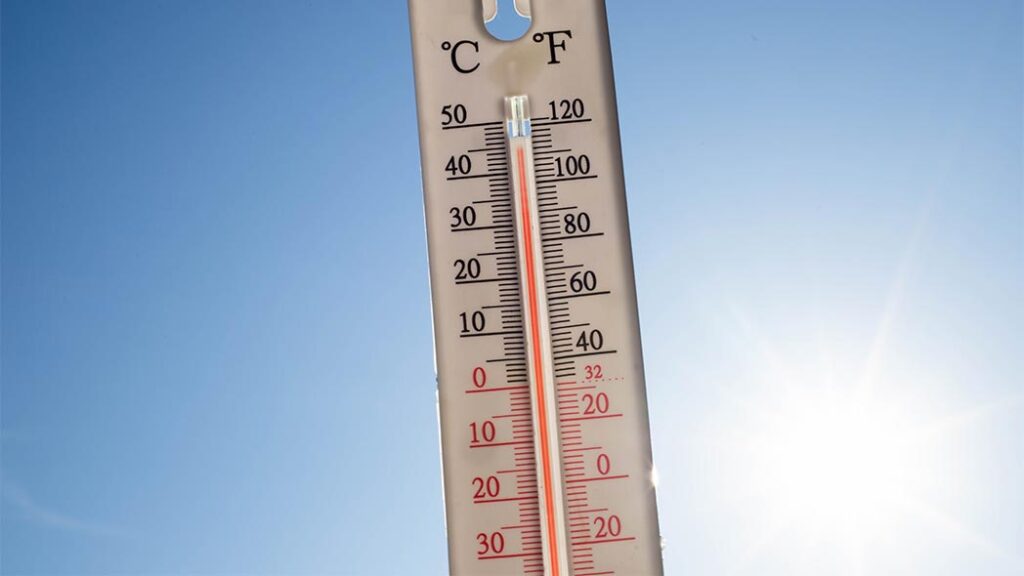
The Health and Safety Executive is drafting new guidelines to protect workers during heatwaves. Beverley Sunderland looks at how employers should respond, and how the law works in other countries.
This summer saw four heatwaves hit the UK, with many forecasters predicting that high temperatures will become more normal for UK workers.
The prolonged hot spells also led many to question, ‘Isn’t it against the law to make us work in these temperatures?’ to which the current answer is that there are no laws or guidance to that effect in the UK.
This is in contrast to the other end of the scale, where the minimum temperature in an indoor workplace should normally be at least 16°C or 13°C if much of the work involves rigorous physical effort.
The reason given by the Health & Safety Executive (HSE) for no upper limit on temperatures is “because in many indoor workplaces high temperatures are not seasonal but created by work activity, for example in bakeries or foundries”.
However, the HSE is now developing plans that would allow workers in manual labour jobs to temporarily stop work during heatwaves when temperatures exceed a certain level, with employers required to provide extra support like rest breaks and access to shade and water. Unions are pushing for a maximum working temperature of 30°C generally and 27°C for manual jobs.
But under HSE’s new plans, employers will be required to conduct “heat stress assessments” when temperatures reach a certain level, and provide additional support based on the assessment’s findings – such as considering flexible working.
Even without these changes, employers in the UK are still required to provide a safe place of work and that includes a reasonable temperature, assessing the risk and consulting with employees.
The HSE’s current guidance says “all workers are entitled to an environment where risks to their health and safety are properly controlled”. Heat is classed as a hazard and comes with legal obligations like any other hazard.
During hot spells, employers should focus on measures such as access to fresh air by opening windows and doors, relaxing strict dress codes, providing access to water, fans and so on. The current HSE guidance also focuses on heat stress and the signs to watch out for.
In Germany, the Technical Rules for Workplaces (rather than the law) recommend that indoor temperatures should not exceed 26°C.
If they do, then employers are expected to put in place measures to protect employee health and safety, such as providing protection against the sun, ventilation, or adjusting work hours.
If the temperature reaches 35°C or higher, then the workplace is considered unsuitable for work unless additional measures like air conditioning or cooling breaks are provided.
In France, there is a ‘Code du Travail’, which does not set a maximum workplace temperature, but it does require employers to make sure their workers are able to do their job under safe conditions.
Under this code, employers in the construction sector must provide their workers with at least three litres of water a day.
Again in Italy there is also no maximum temperature allowed in the workplace, but like other countries employers are obliged to ensure their workers are able to perform their job safely.
This year the different regions have issued orders banning certain types of work during the hottest parts of the day.
In Lombardy, from 2 July to 15 September 2025, on days on which a ‘high’ risk level indication is given, it is forbidden to work outdoors between 12:30 and 16:00 in construction, quarries, farms and floriculture.
In Puglia, in addition to the prohibition during central hours, employers are required to review the start times of activities; increase breaks in shaded areas; distribute fresh water; provide clothing suitable for the heat; and rotate shifts to reduce exposure.
In Spain the maximum working temperature for sedentary work, such as office work is 27°C, while for light work it is 25°C, but this does not apply to all types of work, all workers, nor to all premises.
Maximum temperature levels also apply in Belgium, Hungary, Latvia, Montenegro and Slovenia.
In Australia, a country that has laws allowing workers to stop working if it rains and makes working unsafe, rather surprisingly they do not have corresponding laws in relation to high temperatures.
Employers must provide a safe and healthy work environment, which includes managing risks associated with high temperatures.
This means employers need to assess the risks of working in heat, implement control measures, and ensure workers are not exposed to dangerous conditions.
There is no doubt that global warming means that the UK will continue to experience hotter summer weather and we are currently not set up for it in terms of all workplaces having air conditioning, or always starting work earlier to avoid the heat.
The government will be reluctant to require employers to send employees home or install air conditioning in every workplace because of the additional cost and the impact this may have on the economy.
Even across Europe, it would seem there is little consistency. But, on a practical note, as heatwaves become more common, those UK businesses offering air conditioning could find it much easier to recruit.
Original Article – Personnel today

A pipeline installation contractor in Florida has been cited for exposing employees to safety hazards.…

A car maker in China has had to recall some 183,000 cars following the discovery…

A data centre in New Jersey has received a $1 million fine for environmental violations.…

An impromptu inspection in April of this year by HIQA at an Irish hospital found…

A worker in England was significantly injured after a one-tonne crate fell on him from…

A data centre in Virginia has received a $2.5 million penalty for going above emissions…

In the UK, a near miss involving a passenger train and a telehandler took place…

In Hong Kong, the 19th construction accident leading to a death occurred on Friday, September…
A company in Minnesota has received an almost $19,000 fine for violations regarding air permit…
A panel has found that a Japanese motor manufacturer had some 844 misconduct cases linked…
In Hungary, Prime Minister, Peter Magyar, announced that large manufacturers that are found to have…

The Health and Safety Authority (HSA) this week launched a new campaign in collaboration with…
Fill out the form below and one of our FlexPerts will contact you.