
Orlando Contractor Cited for Safety Hazards that Workers Were Exposed to
A pipeline installation contractor in Florida has been cited for exposing employees to safety hazards.…
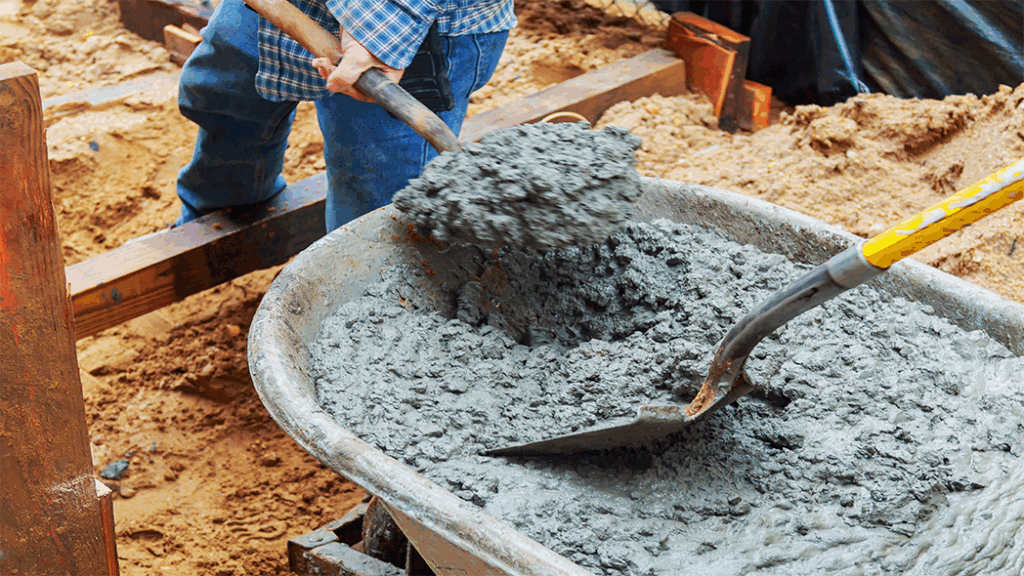
The Global Cement and Concrete Association (GCCA) announces the launch of Low Carbon Ratings (LCR) for Cement and Concrete – a first-of-its-kind transparent global rating system that will enable cement and concrete to be identified based on their carbon footprints. The ratings system is designed to help customers prioritise sustainability when selecting construction materials by using a clear and intuitive AA to G scale.
Inspired by well-known appraising schemes such as the EU’s Energy Performance Certificates and the US Home Energy Rating System, the LCR offers a simple, transparent, and adaptable tool that helps builders, architects, governments, planners, and consumers everywhere in the world to make more informed and sustainable choices.
Thomas Guillot, Chief Executive of the GCCA, said: “Cement and concrete are the foundations of modern life – from the buildings we live and work in, to the roads we travel, and the infrastructure that supports clean water and green energy. As global demand for sustainable construction grows, the need for greater transparency around the carbon footprint of construction materials is more critical than ever.
“Our Low Carbon Ratings system supports more sustainable procurement practices and will empower the entire value chain to accelerate decarbonisation.”
The ratings system is designed to be easily recognisable – with a simple visual graphic that clearly indicates a product’s rating. The carbon rating system for cement and concrete provides consistency and comparability. Countries can adopt the global ratings as they are, or adapt them if local carbon accounting differs from global norms.
Riccardo Savigliano, Chief, Energy Systems and Decarbonization Unit, UNIDO said: “This is a huge step forward towards harmonizing global definitions for low emission cement and concrete in the support of decarbonization.”
With notable construction projects already demonstrating the use of lower carbon cement and concrete, the industry is making important progress. The launch of this global rating system marks another milestone on the road to greater sustainability.
Marlène Dance – Decarbonisation & Sustainable Design Expert, Bouygues Bâtiment International said: “We believe a globally consistent carbon rating system—adopted by all countries and used by all concrete suppliers—would be a game changer.
“We see great value in a simple, user-friendly tool, tailored for construction teams. It will help empower our site crews to better understand and manage the carbon footprint of the concrete they use.”
Mr Guillot added: “With this rating system in place, governments, policymakers and the private sector can now prioritise lower carbon cement and concrete in the procurement process which will in turn further stimulate the industry’s focus on decarbonising these essential building materials.”
Source: Businesswire.com
A pipeline installation contractor in Florida has been cited for exposing employees to safety hazards.…

A car maker in China has had to recall some 183,000 cars following the discovery…

A data centre in New Jersey has received a $1 million fine for environmental violations.…

An impromptu inspection in April of this year by HIQA at an Irish hospital found…

A worker in England was significantly injured after a one-tonne crate fell on him from…

A data centre in Virginia has received a $2.5 million penalty for going above emissions…

In the UK, a near miss involving a passenger train and a telehandler took place…
In Hong Kong, the 19th construction accident leading to a death occurred on Friday, September…

A company in Minnesota has received an almost $19,000 fine for violations regarding air permit…

A panel has found that a Japanese motor manufacturer had some 844 misconduct cases linked…

In Hungary, Prime Minister, Peter Magyar, announced that large manufacturers that are found to have…

The Health and Safety Authority (HSA) this week launched a new campaign in collaboration with…
Fill out the form below and one of our FlexPerts will contact you.