


AnswersWhat's it actually like to use?
Gamechangers: Geolocation for Operational Visibility
Compliance audits, incident investigations, and safety management all hinge on accurate, real-time location data.

Compliance audits, incident investigations, and safety management all hinge on accurate, real-time location data. Yet, many organizations still rely on manual tracking, spreadsheets, or outdated systems, which can lead to gaps in compliance, delayed responses to incidents, and unnecessary operational risk.
Geolocation technology is emerging as a gamechanger, offering the ability to monitor, verify, and manage workforce and assets with precision and accountability.
01What is Geolocation?
At its core, geolocation refers to the ability to identify the real-world geographic location of an object, person, or device. In HSEQ and operational contexts, this often translates to:
- Workforce tracking: Ensuring contractors, staff, and third parties are where they should be during critical tasks.
- Asset monitoring: Tracking the location of equipment, vehicles, and tools to prevent loss or misuse.
- Providing context: Pinpointing the exact location of events to improve response times and investigation accuracy of incidents, or identifying hazards during site inspections.
For HSEQ professionals, geolocation isn’t just a convenience, but a safety net, and a way to ensure operational efficiency.
02Geolocation Matters for Safety and Compliance
Implementing geolocation brings several tangible benefits for HSEQ and operations teams:
- Improved compliance: Real-time location data provides auditable records for regulatory requirements and internal policies.
- Enhanced safety: Quick location tracking during incidents reduces response time and improves emergency planning.
- Operational efficiency: Automated tracking reduces the need for manual checks, freeing up teams for higher-value tasks.
- Accountability: Transparent location verification reduces human error and ensures contractors and staff are in the right place at the right time.
03So what are some of the challenges that Geolocation can address?
Manual tracking errors: Paper-based or spreadsheet methods are prone to mistakes and time-consuming to audit.
Delayed incident response: Without real-time location data, it can take longer to reach personnel in emergencies.
Regulatory scrutiny: Inaccurate records can result in fines or failed audits.
Contractor oversight: Ensuring temporary or third-party staff follow procedures is harder without geolocation tools.
04Best Practices for Implementing Geolocation in HSEQ
To get the most from geolocation, HSEQ professionals should consider:
- Define scope and objectives: Identify which assets, sites, and personnel require tracking.
- Integrate with existing systems: Link geolocation data to your compliance, safety, and reporting platforms.
- Establish clear policies: Communicate how and why location data is used to maintain transparency.
- Regularly review insights: Use location reports to identify trends, inefficiencies, or potential safety risks.
The Geolocation feature is embedded into many FlexManager Modules, such as JRM, Employee Bulletin, and Audits. Take control of compliance, accountability, and safety with solutions designed for the complexities of modern operations.
To find out more about Geolocation at FlexManager, get in touch with our team through our Contact section on FlexManager.com.
 StoryLocation Management: Achieve Compliance on All of Your SitesEquipment & Asset Register · Project Profile
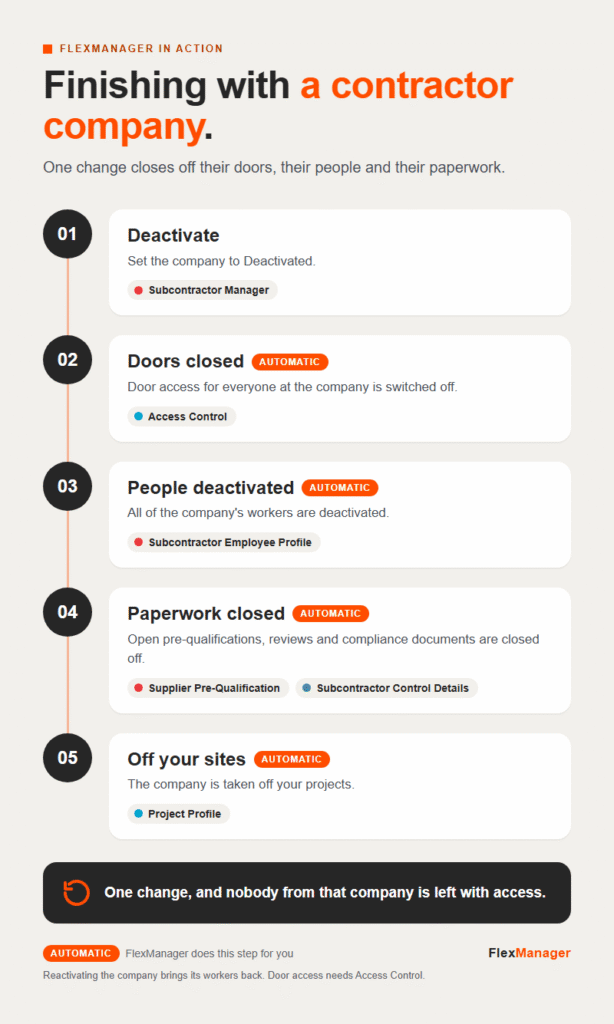 InfographicFinishing with a contractor companyAccess Control · Project Profile · Subcontractor Control Details · Subcontractor Employee Profile · Subcontractor Manager · Supplier Pre-Qualification
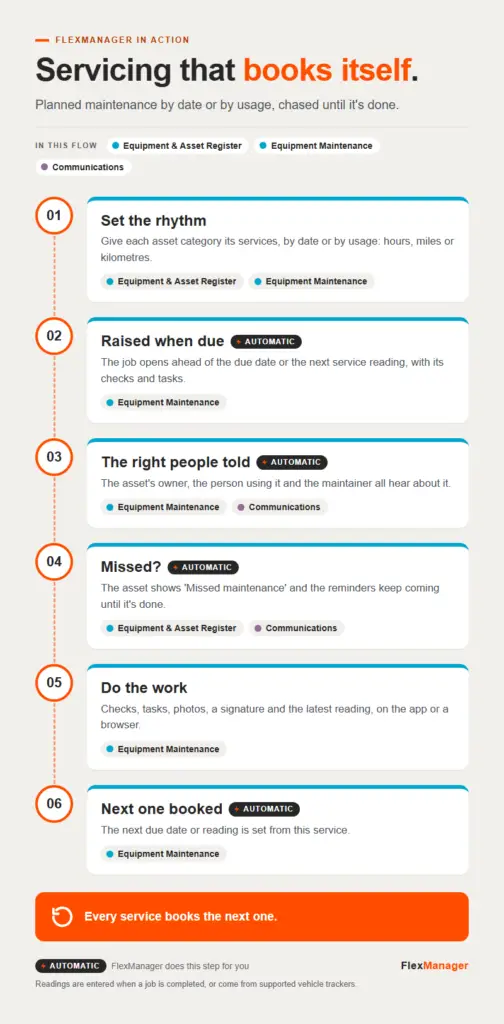 InfographicServicing that books itselfCommunications · Equipment & Asset Register · Equipment Maintenance