

Germany's 2026 Workplace Safety Reforms: Is Your Risk Assessment Compliant?
Germany has always taken workplace safety seriously. But from 1 June 2026, the rules changed in ways that every employer operating in Germany needs to understand clearly, and quickly.
A bundle of reforms to the German Occupational Safety and Health Act (Arbeitsschutzgesetz, ArbSchG) took effect at the end of May and on 1 June 2026. The changes reshape compliance obligations for businesses of all sizes, and they go well beyond paperwork. For the first time in the framework’s history, mental health has been formally integrated into the standard workplace risk assessment process. At the same time, the threshold for appointing a designated safety officer has been raised from 20 to 50 employees, digital delivery of training hours has been expanded, and a new multidisciplinary approach now allows psychologists, biologists, hygienists, and ergonomics experts to qualify as occupational safety specialists.
These are not minor adjustments. They reflect a fundamental recognition that modern workplace risk is broader, more complex, and more difficult to manage than it was when the original framework was written.
What Has Changed and Why It Matters
The most significant shift is the formal requirement to integrate mental health assessment into the Gefährdungsbeurteilung, the standard workplace risk assessment that every German employer is already legally required to conduct and document under Section 5 of the ArbSchG. Previously, mental health considerations existed in the legal framework but were often treated separately or inconsistently. From June 2026, they must be part of the core assessment.
In a live-streamed expert discussion held on 2 June 2026, specialists made the focus very clear: the mental health risk assessment must target working conditions and processes, not individual employees. The goal is to identify stress-inducing workflows, time pressures, communication gaps, and workload patterns, and to take documented, traceable action to address them.
This matters because the data on workplace mental health in Germany is stark. The AOK sick-leave report for 2024 documented a 47 percent rise in mental-health-related absences over the previous decade. The Federal Institute for Occupational Safety and Health (BAuA) published the second chapter of its risk-assessment handbook in June 2026, giving employers practical guidance on how to systematically identify and evaluate mental workload. The BAuA’s own research has shown that only a minority of German companies currently carry out the psychological risk assessment in a legally secure manner.
That is a significant compliance gap. Fines of up to €10,000 apply for failing to meet safety officer requirements, and up to €5,000 for flawed or missing documentation. More broadly, businesses that ignore the expanded risk assessment obligations face growing liability exposure at a time when enforcement is increasing. From 2026, German state authorities are legally required to inspect at least 5 percent of all workplaces in their jurisdiction annually, a mandatory inspection rate introduced through the ArbSchG itself.
The Documentation Challenge
What makes these reforms genuinely challenging for many organisations is not the intent behind them. Most businesses understand that mental health matters and that working conditions affect performance, absence, and retention. The challenge is doing this in a structured, documented, and auditable way.
A mental health risk assessment that sits in a folder on a manager’s desk, reviewed once and never updated, does not meet the legal standard. The ArbSchG requires documented evidence of assessment, documented protective measures, and ongoing review when working conditions change. This is the same cycle that applies to physical hazards, and it now applies equally to psychosocial risk.
For organisations managing multiple teams, shift patterns, or sites, this creates a real operational challenge. Tracking which risk assessments have been completed, which are due for review, which training records are current, and which corrective actions have been closed out is genuinely difficult to do reliably without a structured system.
How FlexManager Supports Compliance
This is where a platform like FlexManager helps organisations move from intention to evidence. FlexManager provides digital risk assessment workflows that can be structured, assigned, completed, and stored in a format that is available for inspection at any time. Whether you are managing physical hazard assessments or expanding your framework to include psychosocial risk, the same structured process applies: identify, assess, document, act, review.
Relevant FlexManager capabilities for German employers include: health and safety compliance management, risk assessment creation and tracking, training management with certification records and expiry alerts, audit and inspection scheduling, and real-time reporting across departments and sites. When your state inspection authority arrives, your compliance evidence should already be organised and accessible, not assembled at short notice.
The 2026 reforms are also a reminder that compliance is not a one-time task. It is a cycle that requires systems, not spreadsheets.
Are your workplace risk assessments ready for the new standard? FlexManager helps organisations build compliance systems that are structured, documented, and always inspection-ready. Book a demo and see how it works in practice.
Access Control: The Fundamentals
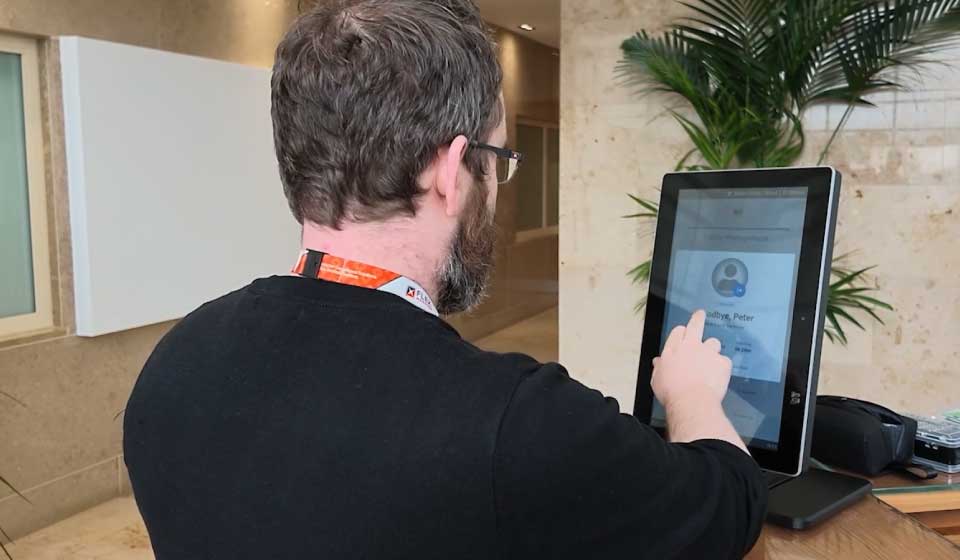
For many organisations, especially those operating across multiple sites or working with contractors, controlling and verifying access can quickly become complex. Manual sign-in processes, paper records, or disconnected systems often make it difficult to confirm whether individuals are properly trained, authorised, or compliant before they enter a site or carry out critical work.
Germany’s 2026 Workplace Safety Reforms: Is Your Risk Assessment Compliant?
Germany's ArbSchG reforms from June 2026 formally integrate mental health into workplace risk assessments. Learn what has changed and how FlexManager helps organisations stay compliant.
UK Compliance Failures Cost Millions: Three Cases Every Safety Manager Should Know
Canada's 2026 Work Fatality Report recorded 1,042 deaths in 2024 and rising rates in seven jurisdictions. Learn why traditional safety approaches are no longer enough and what proactive compliance looks like.
Rethinking the Health & Safety Audit Checklist
Rethinking the H&S Audit Checklist Health & safety audits have never been more importan, but the way many organisations build and use their audit checklists hasn’t kept pace with the reality of modern operations. Too often, checklists are inherited, generic, overloaded, or disconnected from the risks teams actually face day to day. Let’s break down…
We’re Hiring! Become a Flexpert Today
We’re expanding our team and we couldn’t be more excited to welcome applications to the following roles: Customer Operations Manager, Marketing Creative Assistant, Software Tester, and Android Developer.
Revisiting Our “Get to Know ISO” Series
ISO standards can seem complex, but they’re essential tools for building safer, more efficient, and resilient organisations. Our “Get to Know ISO” series breaks down these standards into practical insights, helping businesses understand what they are, why they matter, and how to apply them effectively.
Flex Insights: 15 Years of Innovation
In our Flex Insights series, FlexManager leaders share their perspectives on key topics shaping safer, smarter, and more efficient operations. In this episode, George Curley and Peter Mullins reflect on FlexManager’s 15-year journey, from the early idea behind Training Manager to the evolution of a connected compliance and operational management platform. They discuss how real industry experience, HSEQ knowledge, and a passion for technology helped shape FlexManager’s development, while also exploring the ongoing relationship between health & safety and digital transformation.
Canada 2026 Workplace Fatality Report: Is Your Safety Programme Keeping Up?
Canada's 2026 Work Fatality Report recorded 1,042 deaths in 2024 and rising rates in seven jurisdictions. Learn why traditional safety approaches are no longer enough and what proactive compliance looks like.
What are 4 “Must-Haves” for a HSE Professional?
From managing contractor safety and tracking compliance tasks to responding quickly to incidents, leaders must juggle multiple responsibilities while maintaining clear oversight across their operations. To stay ahead, modern HSE professionals must rely on a combination of effective processes, reliable data, and the right digital tools. Below are four must-haves that help safety leaders maintain control, improve visibility, and drive safer, more compliant workplaces.
HSA Summer Inspection Campaign 2026: Contractor Safety Compliance in Ireland
The Ontario government is supporting a $125 million investment through the Workplace Safety and Insurance Board (WSIB) to establish a permanent Ontario Mine Rescue Training Institute in Sudbury, aimed at strengthening worker safety and emergency preparedness across the province’s mining sector.
INTERSCHUTZ 2026: What Digital Emergency Services Compliance Looks Like Now
INTERSCHUTZ 2026 drew 140,000 visitors and put digital emergency services compliance at the heart of global fire and rescue innovation. Here is what it means for organisations managing assets, training, and inspections.
Why 36% of German Building Safety Systems Are Failing and What It Means for Asset Management
The Ontario government is supporting a $125 million investment through the Workplace Safety and Insurance Board (WSIB) to establish a permanent Ontario Mine Rescue Training Institute in Sudbury, aimed at strengthening worker safety and emergency preparedness across the province’s mining sector.