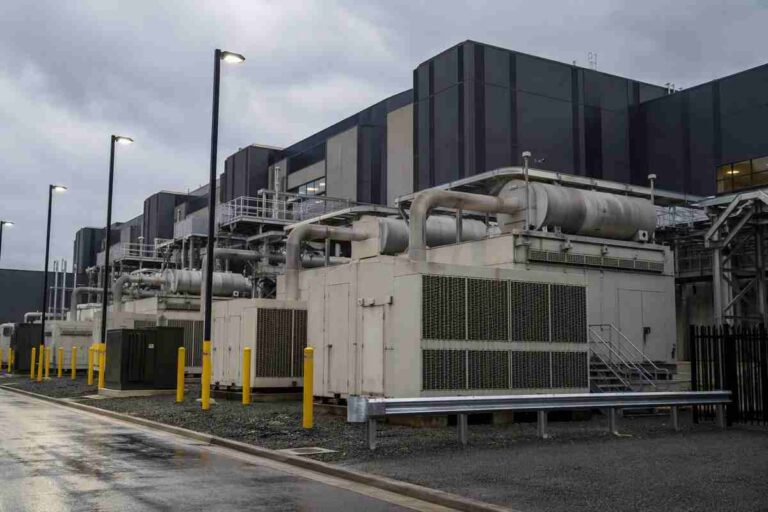


Esso £1M Fine: Why Asset Integrity and Inspection Management Cannot Wait
On 12 June 2026, Esso Petroleum was fined £1 million at Southampton Magistrates’ Court after a catastrophic gas leak at its Fawley Refinery in Hampshire exposed workers to what the HSE described as “life-threatening risks.” The structural collapse that caused the leak was not sudden or unforeseeable. Corrosion on the steel tower responsible had been identified as early as 2010. The company failed to take appropriate action for more than a decade.
The result: approximately 2,400 kilograms of highly flammable liquefied petroleum gas released over 33 hours, workers in the vicinity exposed to the risk of serious injury or death from falling debris and potential ignition, and a prosecution that the HSE’s inspector described in direct terms: “the underlying cause was a failure to properly manage the integrity of plant and equipment, despite corrosion being identified many years earlier.”
This is not only an oil and gas story. It is a warning for every organisation that manages ageing physical assets.
What the HSE Found at Fawley
On 8 November 2022, a large steel tower at the Fawley Refinery partially collapsed. The collapse ruptured connected pipework, releasing approximately 2,400 kilograms of LPG. Around 400 kilograms escaped in the first 30 minutes alone. Emergency measures including water curtains were deployed to reduce the spread of the flammable vapour. It took 33 hours to safely isolate the affected process and vent the remaining gas to the flare system. Fortunately, no injuries were reported.
The HSE investigation found that the collapse was caused by long-standing corrosion of the steel tower. This corrosion had been identified in the company’s own records as far back as 2010. Despite this, adequate action was not taken to manage the deterioration or reduce the associated risk. Esso pleaded guilty to breaching Section 3(1) of the Health and Safety at Work Act 1974 and was fined £1 million plus costs.
In its statement, the HSE made the obligations on all operators of major hazard sites explicit: dutyholders must ensure the integrity of plant and pipework is maintained, equipment is kept in a safe condition, and risks such as corrosion are identified and managed before they escalate into loss-of-containment events.
The Operational Reality Behind the Fine
The Fawley case represents a failure pattern that appears repeatedly in HSE prosecutions across industrial sectors: a known risk, documented in internal records, that was not effectively converted into a planned maintenance or replacement action with a clear owner, timeline, and verification step.
This is not a failure of awareness. The corrosion was known. It is a failure of system: the absence of a structured, auditable process that turns a risk identification into a scheduled intervention, tracks that intervention to completion, and escalates it when it is overdue or when conditions change.
In complex industrial environments, including refineries, chemical plants, power generation facilities, manufacturing operations, port infrastructure, and large facilities management estates, the volume of assets requiring periodic inspection and maintenance is enormous. Without a systematic approach to planning, scheduling, recording, and reviewing these activities, the gap between what the inspection register says and what is actually happening on the ground grows quietly over years. At Fawley, that gap grew for more than a decade.
The HSE is unambiguous about what this means legally. Operators of major hazard sites are required to maintain asset integrity as a specific regulatory obligation, not simply as good practice. Inspection regimes must be robust, corrosion monitoring must be active, and maintenance interventions must be timely. The same principle, scaled appropriately, applies to any organisation managing plant, equipment, or infrastructure where deterioration can lead to harm.
Why Asset Management Systems Are Now a Legal Necessity
The Fawley verdict reinforces what regulators and insurers have been signalling consistently: a paper-based or spreadsheet-driven approach to asset management and maintenance scheduling is no longer adequate in high-risk industrial and facilities environments.
When the HSE or an insurance assessor asks whether an identified risk was acted upon, the answer must be demonstrable. A written inspection report from 2010 that was filed and not followed up is not a management system. It is evidence of a gap. What organisations need is a system that records the identification of a risk, generates a maintenance or inspection task, assigns it, tracks it to completion, and provides an auditable history of every action taken and every action deferred.
For facilities managers, industrial operators, and asset owners managing complex estates, the question after Fawley is simple: if a regulator examined your asset records today, could you show them that every known risk has a documented and current management response?
How FlexManager Supports Asset Integrity and Planned Maintenance
Asset management in FlexManager allows organisations to maintain a complete, structured register of physical assets, with condition records, inspection history, and risk flags attached to each asset. When a risk is identified, whether during a scheduled inspection, a reactive survey, or a regulatory audit, it is recorded against the asset and generates a traceable action.
Planned preventive maintenance (PPM) scheduling ensures that inspection and maintenance activities are programmed in advance, assigned to the right people, and tracked to completion. Overdue tasks are flagged automatically. Nothing falls through the gaps because a key person changed roles or a paper job card was misfiled.
Audit and inspection management provides structured checklists, digital sign-off, and photographic evidence capture for every inspection carried out. The result is an auditable record that demonstrates, at any point in time, what was inspected, by whom, when, what was found, and what action was taken.
Compliance reporting and real-time dashboards give asset owners, facility managers, and HSE leads a live view of the condition of their estate: what is compliant, what is approaching a maintenance window, what is overdue, and where the highest-risk items sit.
Could This Happen in Your Organisation?
The Esso Fawley prosecution asks a hard question of every organisation managing plant and equipment. If a structural weakness had been documented in your asset records twelve years ago, would your current system ensure it had been addressed? Would you be able to prove it? If the honest answer is uncertain, that is the starting point for a conversation. Book a demo today and see how FlexManager helps organisations build the maintenance and inspection frameworks that keep assets safe and keep organisations on the right side of the regulator.
Original Article: Esso fined £1 million after major gas leak at Fawley refinery
Esso £1M Fine: Why Asset Integrity and Inspection Management Cannot Wait
Esso was fined £1 million after corrosion identified in 2010 caused a catastrophic gas leak in 2022. The Fawley verdict is a warning for every organisation managing ageing industrial assets.
France PST 2026–2030: What Employers Need to Know About Workplace Safety Compliance
France has launched its National Occupational Health Plan 2026–2030, raising the bar on workplace safety compliance, risk assessments, and contractor worker training. Here is what it means for employers.
Equipment for Safer, Smarter HSEQ Management: Our Product Showcases
Whether it’s improving data accuracy, streamlining training, or equipping teams with durable technology, FlexManager has you covered with reliable products that provide assurance in compliance for organisations. We are looking back at our "Product Showcases" to explore once more how our centralised solution can work with technology to transform day-to-day operations for our clients. Let's revisit each product featured, what it offers, and why it matters.
Ontario’s JHSC Training Is Changing on 1 July 2026. Here Is What Employers Need to Know
Ontario's JHSC certification training programme changes from 1 July 2026. Find out what is new and how FlexManager helps Ontario employers stay compliant and inspection-ready.
Access Control: The Fundamentals
For many organisations, especially those operating across multiple sites or working with contractors, controlling and verifying access can quickly become complex. Manual sign-in processes, paper records, or disconnected systems often make it difficult to confirm whether individuals are properly trained, authorised, or compliant before they enter a site or carry out critical work.
Germany’s 2026 Workplace Safety Reforms: Is Your Risk Assessment Compliant?
Germany's ArbSchG reforms from June 2026 formally integrate mental health into workplace risk assessments. Learn what has changed and how FlexManager helps organisations stay compliant.
UK Compliance Failures Cost Millions: Three Cases Every Safety Manager Should Know
Canada's 2026 Work Fatality Report recorded 1,042 deaths in 2024 and rising rates in seven jurisdictions. Learn why traditional safety approaches are no longer enough and what proactive compliance looks like.
Rethinking the Health & Safety Audit Checklist
Rethinking the H&S Audit Checklist Health & safety audits have never been more importan, but the way many organisations build and use their audit checklists hasn’t kept pace with the reality of modern operations. Too often, checklists are inherited, generic, overloaded, or disconnected from the risks teams actually face day to day. Let’s break down…
We’re Hiring! Become a Flexpert Today
We’re expanding our team and we couldn’t be more excited to welcome applications to the following roles: Customer Operations Manager, Marketing Creative Assistant, Software Tester, and Android Developer.
Revisiting Our “Get to Know ISO” Series
ISO standards can seem complex, but they’re essential tools for building safer, more efficient, and resilient organisations. Our “Get to Know ISO” series breaks down these standards into practical insights, helping businesses understand what they are, why they matter, and how to apply them effectively.
Flex Insights: 15 Years of Innovation
In our Flex Insights series, FlexManager leaders share their perspectives on key topics shaping safer, smarter, and more efficient operations. In this episode, George Curley and Peter Mullins reflect on FlexManager’s 15-year journey, from the early idea behind Training Manager to the evolution of a connected compliance and operational management platform. They discuss how real industry experience, HSEQ knowledge, and a passion for technology helped shape FlexManager’s development, while also exploring the ongoing relationship between health & safety and digital transformation.
Canada 2026 Workplace Fatality Report: Is Your Safety Programme Keeping Up?
Canada's 2026 Work Fatality Report recorded 1,042 deaths in 2024 and rising rates in seven jurisdictions. Learn why traditional safety approaches are no longer enough and what proactive compliance looks like.