FlexManager at the 2026 National Manufacturing & Supply Chain Expo
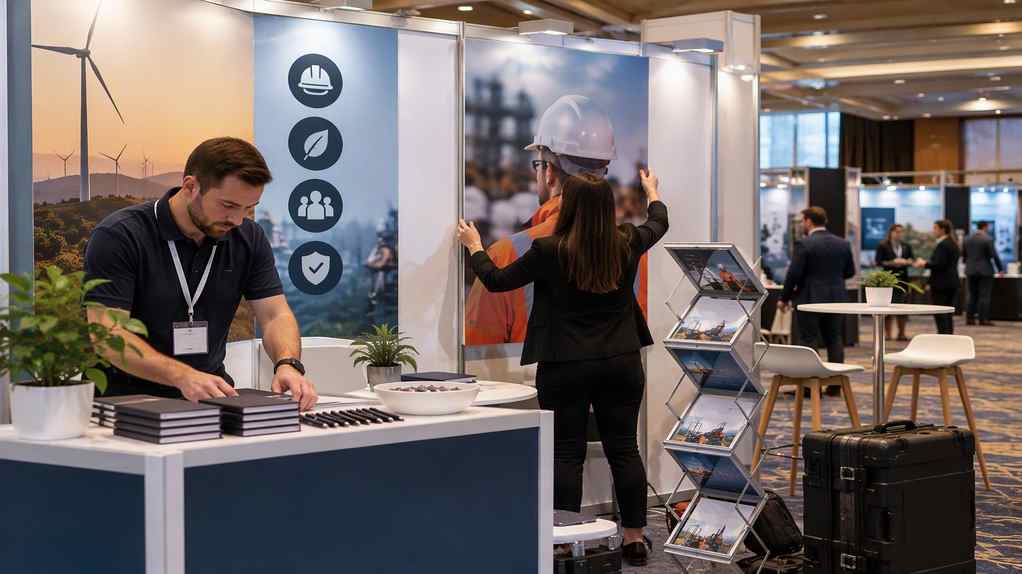
FlexManager is pleased to announce that we will be exhibiting at the National Manufacturing & Supply Chain Expo, taking place on 27–28 May at RDS Simmonscourt, Dublin.
A new benchmark study from the J. J. Keller Center for Market Insights and the American Society of Safety Professionals (ASSP) suggests many U.S. construction employers are struggling with staffing, training and day‑to‑day safety practices, even as they continue to regard safety as a core value.
The 2025 Construction Industry Safety Challenges report identifies labour shortages (38 per cent), rising material costs (35 per cent) and job site safety (32 per cent) as the top three challenges for respondents. It also highlights inconsistent personal protective equipment (PPE) use, limited attention to mental health, and a lack of confidence in current training as ongoing concerns.
“Improving safety in construction requires current data to help us better understand the obstacles that safety professionals face every day,” said Ray Chishti, senior EHS editor at J. J. Keller & Associates, Inc.
Chishti noted today’s construction workforce is increasingly specialised, which can intensify hiring challenges for contractors seeking experienced tradespeople for niche work.
Beyond staffing, the study points to uncertainty around regulatory compliance and the effectiveness of current training. Nearly half of respondents reported being only “somewhat confident” to “not confident at all” that their training prepares employees to work safely and in compliance with regulations.
Chishti said many contractors are looking to modernise how they deliver training, particularly for dispersed or remote crews.
“A lot of the contractors are looking for the latest mousetrap, so to speak, in terms of learning management platforms, really looking for digitized training, especially being in remote areas on job sites,” he said. “They’re looking for a lot of digitized training forums.”
According to Chishti, contractors are also seeking technology that can help them collect and interpret safety data more effectively, including both leading and lagging indicators. They are evaluating mobile apps, analytics dashboards and integrated systems that can support training, audits and inspections in a single platform.
“Contractors are kind of looking at AI as the next solution for technology advancement,” he said.
The study also indicates growing interest in real‑time incident reporting, data dashboards and tools such as drones and cameras for site monitoring and safety audits.
Wearable technologies are another area of focus, particularly devices designed to monitor heat and cold stress on job sites. Chishti said respondents are looking for “advancements in wearable technologies that can read signs and symptoms or give output, monitor employees better.”
Despite long‑standing regulatory requirements, PPE practices remain a significant concern. More than half of respondents cited inconsistent PPE use as their greatest challenge, with comfort and fit emerging as primary barriers.
“We have found that respondents have said that a large percentage of their workers are not wearing PPE consistently,” Chishti said. “Typically, the greatest reason is just discomfort or poor fit.”
He said respondents are also concerned about ensuring PPE can cope with different weather conditions, particularly on outdoor sites that face heat, cold, wind and precipitation.
Inadequate training on how and when to use PPE continues to surface as an issue, along with delays in obtaining specialised equipment in some cases.
Mental health is another area where awareness appears to be ahead of practice. The study found that 51 per cent of respondents said their organizations take employee mental health only “somewhat seriously” or “not at all seriously.”

Chishti said mental health has shifted from being viewed strictly as a human resources matter to a more mainstream safety topic.
Although the findings highlight numerous gaps and unmet needs, Chishti said the results also suggest that safety is deeply embedded in many construction organisations.
“If we take the study in totality, safety continues to be of value with our respondents,” he said.
“We were happy to see that safety is not a priority, it’s a value that’s instilled with a lot of the respondents and in the industry.”
From his perspective, the challenge is less about convincing employers that safety matters and more about giving them evolving tools, training and data to manage risk in a fast‑paced, increasingly specialised sector.
Original Article – The Safety Mag
FlexManager is pleased to announce that we will be exhibiting at the National Manufacturing & Supply Chain Expo, taking place on 27–28 May at RDS Simmonscourt, Dublin.
On 23 May, FlexManager officially turns 15 years old, and we want to take a moment to say thank you.
As fire services face increasingly complex incidents, from climate-driven emergencies to large-scale civil protection challenges, the need for connected, intelligent operational systems has never been greater.
FlexManager is excited to announce that we will be exhibiting at INTERSCHUTZ 2026, taking place in Hannover, Germany. Held every five years, INTERSCHUTZ is the world’s leading trade fair for fire and rescue services, civil protection, safety, and security. The event brings together international emergency service professionals, technology providers, and industry experts to explore the latest innovations shaping the future of hazard prevention and emergency response.
Compliance software is only as effective as the people using it. Without proper training, modules sit unused, reports go unsubmitted, and risks can go unseen. FlexManager bridges that gap with specialist training delivered both on-site and remotely, giving your team the confidence and know-how to fully leverage the platform, no matter where your operations are.
Every job carries risks, even routine tasks. A Job Hazard Analysis (JHA)/Job Risk Management (JRM) task breaks a job into individual steps, identifies potential hazards at each stage, and defines control measures to reduce risk. For HSEQ professionals and operations managers, JHAs are critical tools for preventing injuries, ensuring compliance, and maintaining operational efficiency.
For QHSE, the pace of change is accelerating. Expanding regulatory requirements, higher expectations from clients, and tighter operational margins are pushing compliance into a fully fledged business capability.
It’s Time for a Recap: Chief Fire Officers’ Association – 67th Annual Conference https://vimeo.com/1191458151?fl=pl&fe=sh Held in Sligo on 6 and 7 May, the Chief Fire Officers’ Association 67th Annual Conference 2026 brought together fire service leaders, emergency management professionals, and key stakeholders from across Ireland to explore the evolving risks shaping the future of fire…
Many compliance software platforms charge per user. We don’t. That's right, at FlexManager clients are charged based on the number of users that are added to the system. Whether you have 10 users or 1,000, the cost does not increase because of headcount.
It’s Time for a Recap: CIF Health & Safety Summit 2026 https://vimeo.com/1191196825?fl=pl&fe=sh The CIF Health & Safety Summit 2026 brought together leaders from across Ireland’s construction industry to explore one of the sector’s biggest priorities: moving beyond reactive compliance and building a stronger, more proactive culture of health, safety, and wellbeing. Held at Croke Park,…
We are into the summer months. With this in mind, it is important to adapt to our environment and avoid any dangers related to extreme temperatures. Heat stress and dehydration can cause more than just discomfort; it can pose serious risk to health and safety. Keep your teams informed on how to beat the heat. Send an Employee Bulletin today to share these 5 essential tips for working in heat.
Fire services operate in high-pressure, high-risk environments. Every second counts, every piece of equipment must be ready, and every process must run smoothly. Many organisations still struggle with manual workflows, paper-based inspections, or disconnected systems, which can slow operations, increase risk, and complicate compliance.
Fill out the form below and one of our FlexPerts will contact you.