FlexManager at the 2026 National Manufacturing & Supply Chain Expo
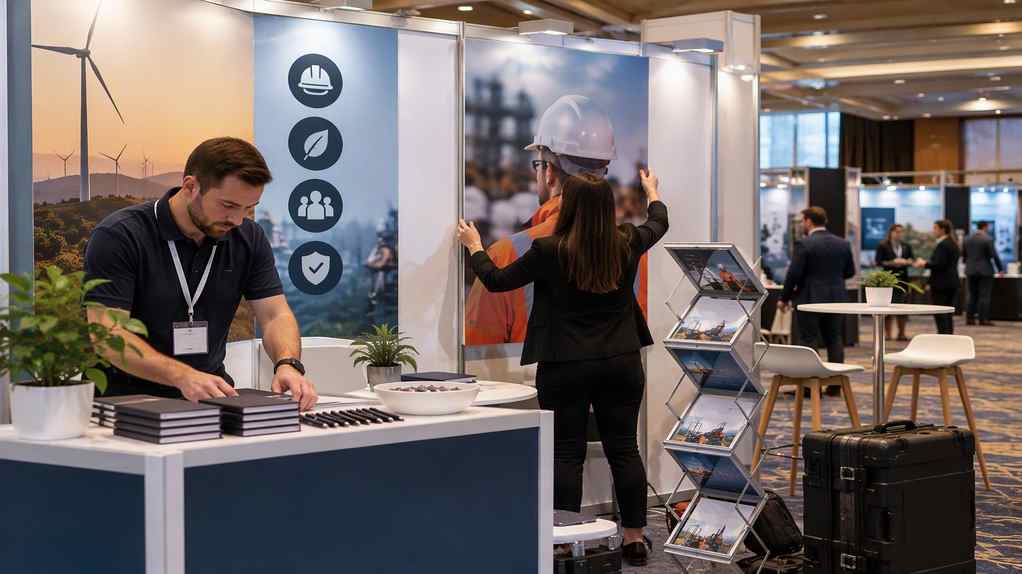
FlexManager is pleased to announce that we will be exhibiting at the National Manufacturing & Supply Chain Expo, taking place on 27–28 May at RDS Simmonscourt, Dublin.
A Transportation Safety Board of Canada investigation into a 2023 lifeboat accident aboard the bulk carrier Golden Zhejiang reveals that formal safety management systems alone cannot prevent serious incidents—a critical finding for health and safety leaders across industries where regulatory compliance is often mistaken for genuine safety culture.
The incident and immediate causes
On September 2, 2023, a second engineer aboard the Golden Zhejiang was seriously injured when a free-fall lifeboat accidentally released during routine maintenance while the vessel was anchored in Trincomali Channel, British Columbia. The engineer, who had been aboard the vessel for only 12 days, was not secured in a seat when the lifeboat dropped approximately 19 metres into the water. He sustained permanent injuries including serious head trauma and partial memory loss.
The TSB identified three direct causes: the absence of a required risk assessment before entering the lifeboat, inadequate securing cables that failed under shock load, and the engineer’s lack of equipment-specific familiarization.
Systemic failures and safety culture breakdown
However, the investigation uncovered deeper organizational deficiencies that health and safety professionals should recognize as warning signs. The TSB found that “the presence of formal safety management processes does not ensure that hazards are identified, and that an effective, mature safety culture is being developed.”
The company’s safety management system documentation exceeded 1,000 pages, yet critical information was not accessible to crew when needed. The updated lifeboat manual—which contained improved instructions designed specifically to prevent accidents—was not aboard the vessel.
Most critically, “crew members acquiring equipment-specific knowledge from familiarization, drills, and technical documentation” without such knowledge “may inadvertently activate safety-critical controls, thereby increasing the risks to themselves and other crew members.”
The investigation revealed that documented safety reporting mechanisms were not being used. A hydraulic leak on the lifeboat davit had been noted in monthly checks since June 2023 but never formally reported. The TSB noted a broader problem: “A mature safety culture, including a trusted process for communication, is necessary for 2-way communication between a vessel’s crew and shore-based management.”
Compliance-safety disconnect
The investigation emphasized a critical distinction for safety leaders: regulatory compliance does not equal genuine safety management. While the vessel had passed International Safety Management audits months before the incident with zero non-conformities noted, a subsequent audit identified approximately 47 maintenance deficiencies and determined the ship was “seriously lacking maintenance.”
The TSB found that operations had “drifted away from the 3 goals of an SMS and had become focused on regulatory compliance. A mature safety culture, complete with trusted, non-punitive, two-way communications to permit a full assessment of risk was not evident.”
This drift toward “paper safety”—where documentation demonstrates compliance but fails to address actual operational hazards—represents a systemic risk that extends beyond maritime operations.
The investigation underscores that safety leadership requires more than procedural frameworks. Effective safety culture demands open communication channels where crew members feel safe reporting hazards without fear of reprisal, equipment-specific training for all personnel performing maintenance tasks, and shore-based management actively seeking information about vessel conditions rather than accepting the absence of reported problems as evidence of safety.
The TSB has designated safety management as a priority issue for 2025, finding that “actions taken to date are inadequate, and that industry and regulators need to take additional concrete measures to eliminate the risks.”

Original Article – The Safety Mag
FlexManager is pleased to announce that we will be exhibiting at the National Manufacturing & Supply Chain Expo, taking place on 27–28 May at RDS Simmonscourt, Dublin.
On 23 May, FlexManager officially turns 15 years old, and we want to take a moment to say thank you.
As fire services face increasingly complex incidents, from climate-driven emergencies to large-scale civil protection challenges, the need for connected, intelligent operational systems has never been greater.
FlexManager is excited to announce that we will be exhibiting at INTERSCHUTZ 2026, taking place in Hannover, Germany. Held every five years, INTERSCHUTZ is the world’s leading trade fair for fire and rescue services, civil protection, safety, and security. The event brings together international emergency service professionals, technology providers, and industry experts to explore the latest innovations shaping the future of hazard prevention and emergency response.
Compliance software is only as effective as the people using it. Without proper training, modules sit unused, reports go unsubmitted, and risks can go unseen. FlexManager bridges that gap with specialist training delivered both on-site and remotely, giving your team the confidence and know-how to fully leverage the platform, no matter where your operations are.
Every job carries risks, even routine tasks. A Job Hazard Analysis (JHA)/Job Risk Management (JRM) task breaks a job into individual steps, identifies potential hazards at each stage, and defines control measures to reduce risk. For HSEQ professionals and operations managers, JHAs are critical tools for preventing injuries, ensuring compliance, and maintaining operational efficiency.
For QHSE, the pace of change is accelerating. Expanding regulatory requirements, higher expectations from clients, and tighter operational margins are pushing compliance into a fully fledged business capability.
It’s Time for a Recap: Chief Fire Officers’ Association – 67th Annual Conference https://vimeo.com/1191458151?fl=pl&fe=sh Held in Sligo on 6 and 7 May, the Chief Fire Officers’ Association 67th Annual Conference 2026 brought together fire service leaders, emergency management professionals, and key stakeholders from across Ireland to explore the evolving risks shaping the future of fire…
Many compliance software platforms charge per user. We don’t. That's right, at FlexManager clients are charged based on the number of users that are added to the system. Whether you have 10 users or 1,000, the cost does not increase because of headcount.
It’s Time for a Recap: CIF Health & Safety Summit 2026 https://vimeo.com/1191196825?fl=pl&fe=sh The CIF Health & Safety Summit 2026 brought together leaders from across Ireland’s construction industry to explore one of the sector’s biggest priorities: moving beyond reactive compliance and building a stronger, more proactive culture of health, safety, and wellbeing. Held at Croke Park,…
We are into the summer months. With this in mind, it is important to adapt to our environment and avoid any dangers related to extreme temperatures. Heat stress and dehydration can cause more than just discomfort; it can pose serious risk to health and safety. Keep your teams informed on how to beat the heat. Send an Employee Bulletin today to share these 5 essential tips for working in heat.
Fire services operate in high-pressure, high-risk environments. Every second counts, every piece of equipment must be ready, and every process must run smoothly. Many organisations still struggle with manual workflows, paper-based inspections, or disconnected systems, which can slow operations, increase risk, and complicate compliance.
Fill out the form below and one of our FlexPerts will contact you.