Health Surveillance Compliance: HSE’s Landmark Warning to Employers
HSE issued its first Prohibition Notice against an occupational health provider. See what it means for health surveillance compliance and contractor management.
Manitoba’s Workplace Safety and Health (WSH) branch has halted certain operations following an explosion that injured three employees late last month, according to a report.
A provincial spokesperson said WSH inspectors have issued two stop‑work orders and one improvement order affecting service and maintenance activities at the site, as well as the use of a forklift at the propane distribution facility. The orders will remain in place until the employer can demonstrate compliance and address identified hazards.
Firefighters were dispatched at around 3:30 p.m. after a call about an explosion.
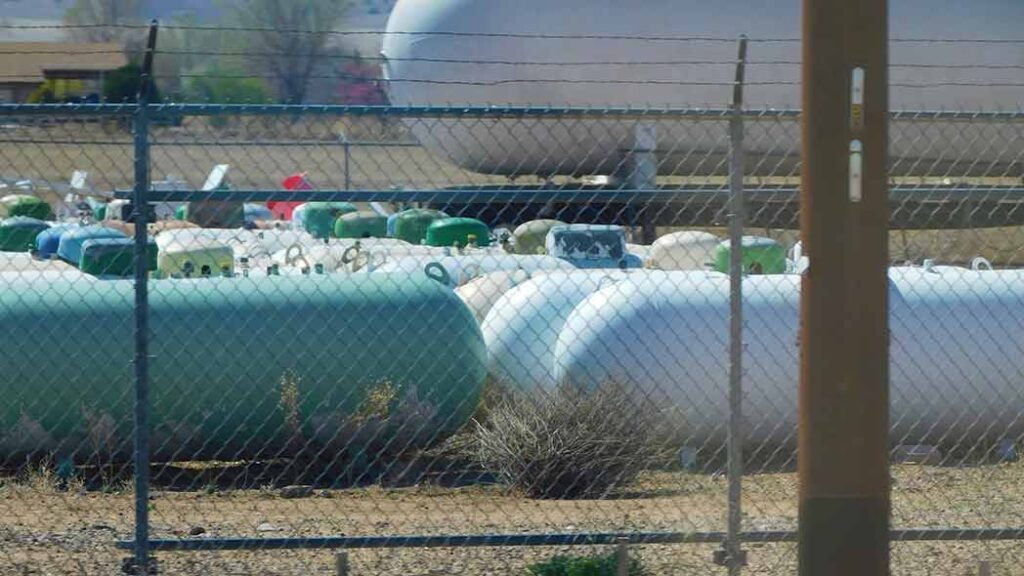
When crews arrived, they found a structure on fire that contained a substantial number of propane cylinders. Fire officials told CTV News the burning building held roughly 100 propane tanks, while three large tanks and an estimated 250 smaller cylinders were positioned around the outside of the structure. The size and configuration of the fuel inventory raised concerns about the risk of further explosions or rapid fire spread as emergency personnel worked to secure the area.
Two injured workers were transported from the facility to Winnipeg’s Health Sciences Centre — one by STARS Air Ambulance and the other by ground ambulance — according to earlier reporting by CTV News. A third worker was treated on scene and released.
RCMP said all three individuals sustained non‑life‑threatening injuries. A spokesperson for Shared Health told CTV News the patient flown by STARS was discharged from hospital later the same day.
Outside the structure, there were an additional two to three bulk tanks and about 250 more cylinders, significantly increasing the complexity and risk of the response, deputy fire chief Jason Kroeker said, according to a CBC report.
More than 2,000 tanks were also stored elsewhere on the property, according to the Winnipeg Free Press.
The province have said, citing an RCMP investigation, that the explosion originated in a gas cylinder.
In response, WSH has directed its orders at the facility’s service and maintenance work and at forklift operations, CTV News reported. While specific wording of the orders has not been released, measures of this kind typically require employers to suspend designated tasks, review and, if necessary, revise safe work procedures, verify worker training, and show that equipment is being used and maintained in line with regulatory and manufacturer requirements.
The ongoing WSH investigation is expected to examine how propane cylinders and tanks were stored and handled, what controls were in place for maintenance on gas systems and related equipment, and how powered industrial trucks were being operated in proximity to flammable gases. Investigators are also likely to assess whether existing risk assessments and safeguards were adequate for a site managing hundreds of propane containers.
Original Article – The Safety Mag
HSE issued its first Prohibition Notice against an occupational health provider. See what it means for health surveillance compliance and contractor management.
For many organisations, managing HSEQ compliance has traditionally meant juggling spreadsheets, paper records, and disconnected systems. The result? Time-consuming processes, limited visibility, and a higher risk of errors or missed obligations.
Germany's TÜV Building Report 2026 found 35.9% of technical building systems have major defects, including fire suppression and ventilation. Here is what it means for facilities managers everywhere.
For organisations operating across multiple sites or with contractor teams, managing access isn’t just about security, it’s about safety, compliance, and operational efficiency. Every individual entering a site or performing tasks should be authorised, trained, and verified.
The HSA and HSENI have launched a joint all-island silica dust inspection campaign for construction sites running June to August 2026. Here is what employers need to do to stay compliant.
Esso was fined £1 million after corrosion identified in 2010 caused a catastrophic gas leak in 2022. The Fawley verdict is a warning for every organisation managing ageing industrial assets.
France has launched its National Occupational Health Plan 2026–2030, raising the bar on workplace safety compliance, risk assessments, and contractor worker training. Here is what it means for employers.
Whether it’s improving data accuracy, streamlining training, or equipping teams with durable technology, FlexManager has you covered with reliable products that provide assurance in compliance for organisations. We are looking back at our "Product Showcases" to explore once more how our centralised solution can work with technology to transform day-to-day operations for our clients. Let's revisit each product featured, what it offers, and why it matters.
Ontario's JHSC certification training programme changes from 1 July 2026. Find out what is new and how FlexManager helps Ontario employers stay compliant and inspection-ready.
For many organisations, especially those operating across multiple sites or working with contractors, controlling and verifying access can quickly become complex. Manual sign-in processes, paper records, or disconnected systems often make it difficult to confirm whether individuals are properly trained, authorised, or compliant before they enter a site or carry out critical work.
Germany's ArbSchG reforms from June 2026 formally integrate mental health into workplace risk assessments. Learn what has changed and how FlexManager helps organisations stay compliant.
Canada's 2026 Work Fatality Report recorded 1,042 deaths in 2024 and rising rates in seven jurisdictions. Learn why traditional safety approaches are no longer enough and what proactive compliance looks like.
Fill out the form below and one of our FlexPerts will contact you.