
Orlando Contractor Cited for Safety Hazards that Workers Were Exposed to
A pipeline installation contractor in Florida has been cited for exposing employees to safety hazards.…
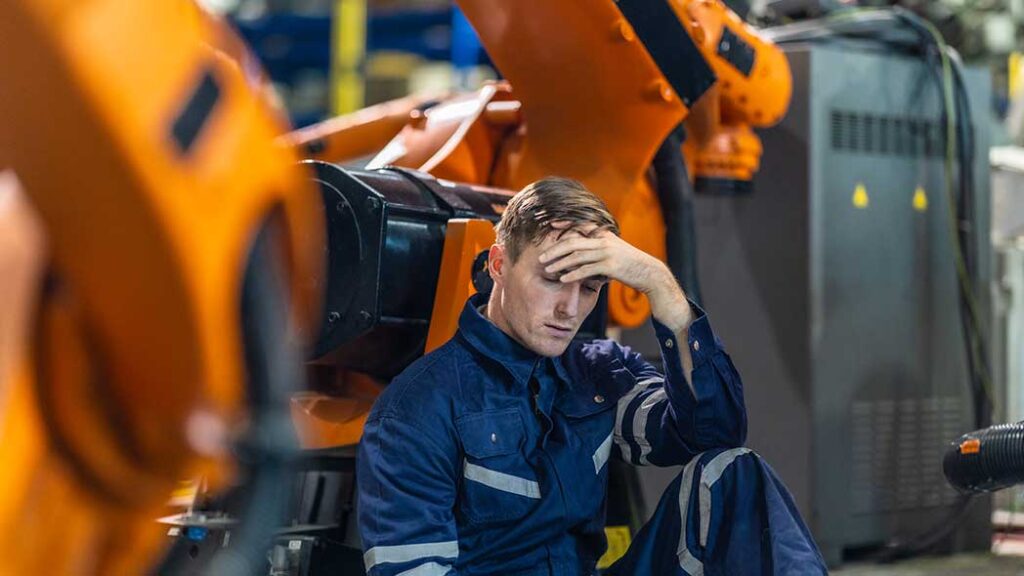
As Stress Awareness Week 2025 begins, the Health and Safety Executive (HSE) is reminding employers that work-related stress is one of the leading causes of ill health at work – and that preventing it is a legal duty, not just a ‘nice-to-have’.
In 2023/24, HSE statistics show that 776,000 workers reported suffering from work-related stress, depression or anxiety. This accounted for nearly half of all self-reported work-related ill health and led to an estimated 16.4 million working days lost over the same period.
Failing to manage stress effectively can also result in reduced productivity and higher staff turnover.
Stress risk assessments – it’s the law
Some employers may not be aware that they must assess and manage the risks of work-related stress in the same way as other health and safety risks.
Under the Health and Safety at Work Act 1974 and the Management of Health and Safety at Work Regulations 1999, employers must assess risks and take reasonably practicable steps to prevent harm — including from stress.
It’s not just about responding when problems arise. It’s about taking proactive steps to understand the pressures your employees face and acting on what you find.
Free tools and support from HSE
HSE’s Working Minds campaign makes it easier for employers to take action. It’s based on five simple steps – the 5 Rs:
“Prevention is better than cure,” says Kayleigh Roberts, HSE’s Work-Related Stress Policy Lead. “By acting proactively, employers can better protect employee wellbeing, reduce sickness absence and retain skilled, experienced staff.”
What employers can do this week
Taking simple, reasonable steps not only protects your employees – it helps you meet your legal obligations and build a healthier, more resilient workforce.
Share the message
Help spread awareness during Stress Awareness Week:
Original Article – Health and Safety Executive

A pipeline installation contractor in Florida has been cited for exposing employees to safety hazards.…
A car maker in China has had to recall some 183,000 cars following the discovery…

A data centre in New Jersey has received a $1 million fine for environmental violations.…

An impromptu inspection in April of this year by HIQA at an Irish hospital found…

A worker in England was significantly injured after a one-tonne crate fell on him from…

A data centre in Virginia has received a $2.5 million penalty for going above emissions…

In the UK, a near miss involving a passenger train and a telehandler took place…

In Hong Kong, the 19th construction accident leading to a death occurred on Friday, September…

A company in Minnesota has received an almost $19,000 fine for violations regarding air permit…

A panel has found that a Japanese motor manufacturer had some 844 misconduct cases linked…
In Hungary, Prime Minister, Peter Magyar, announced that large manufacturers that are found to have…

The Health and Safety Authority (HSA) this week launched a new campaign in collaboration with…
Fill out the form below and one of our FlexPerts will contact you.